

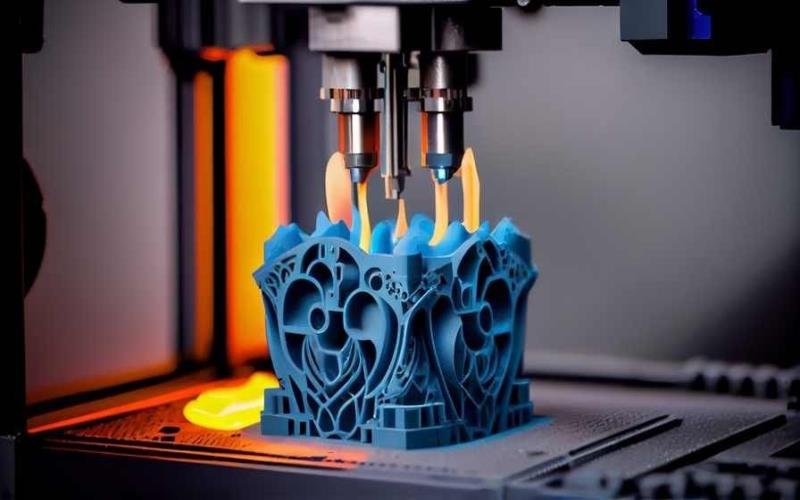
The Expansion of 3D Printing in the Manufacturing Industry
The manufacturing industry has witnessed significant transformations throughout history, but few innovations have been as disruptive as 3D printing. Also known as additive manufacturing, 3D printing is revolutionizing the way products are designed, prototyped, and produced. The technology allows manufacturers to create three-dimensional objects from digital designs, using materials such as plastics, metals, and even bio-materials, layer by layer.
Initially used for prototyping and design purposes, 3D printing has now expanded into large-scale production, pushing the boundaries of what can be achieved in various industries, including aerospace, healthcare, automotive, and consumer goods. As the technology continues to advance, the expansion of 3D printing in manufacturing is poised to redefine how products are made, offering significant benefits in terms of speed, cost-efficiency, customization, and sustainability.
Speed and Efficiency in Production
One of the most significant advantages of 3D printing is its ability to dramatically reduce the time it takes to move from concept to production. Traditional manufacturing methods often require multiple steps, including designing, tooling, and assembly, which can be time-consuming and costly. In contrast, 3D printing simplifies the process by directly producing parts from a digital file, eliminating the need for extensive tooling and setup.
This streamlined production process enables manufacturers to create prototypes and final products faster than ever before. Industries such as aerospace and automotive, which rely on highly complex parts and components, are benefitting from this increased speed. For instance, aerospace companies can now produce lighter and more efficient components for aircraft engines in a fraction of the time required by traditional methods.
Additionally, 3D printing reduces lead times and allows for rapid iteration. Design changes can be made on the fly without the need to overhaul entire production lines, making the technology especially useful for industries where flexibility and adaptability are crucial.
Cost-Effectiveness and Reduced Waste
Cost reduction is another driving factor behind the widespread adoption of 3D printing in manufacturing. Traditional manufacturing methods often require expensive molds and specialized tools, making the production of small batches or custom parts prohibitively expensive. With 3D printing, manufacturers can create complex parts without the need for costly molds, making small production runs and custom orders economically feasible.
Moreover, 3D printing is a more sustainable process, as it produces significantly less waste compared to traditional subtractive manufacturing methods, where excess material is removed to create a part. In 3D printing, materials are added layer by layer, using only the necessary amount to create the object. This not only reduces material waste but also leads to cost savings, particularly when using expensive materials like titanium or other high-performance alloys.
Industries that deal with highly customized products, such as medical devices or specialized tools, are finding 3D printing to be a game-changer. The technology allows manufacturers to produce one-off or limited-edition items at a fraction of the cost of traditional methods.
Customization and Design Flexibility
3D printing offers unparalleled flexibility in design, allowing manufacturers to create intricate and highly detailed products that would be difficult or impossible to achieve with conventional methods. This flexibility has opened up new possibilities for customization, especially in industries where individualized products are in high demand.
For instance, in the healthcare sector, 3D printing is being used to produce custom prosthetics, dental implants, and surgical tools that are tailored to each patient’s unique anatomy. Similarly, the fashion and jewelry industries are leveraging 3D printing to create personalized, one-of-a-kind pieces that cater to individual tastes and preferences.
In addition to customization, 3D printing enables the production of complex geometries that would be challenging or impossible to produce using traditional methods. This includes intricate lattice structures, internal cavities, and other designs that enhance the functionality and performance of products. As a result, 3D printing is enabling designers and engineers to push the boundaries of innovation.
Sustainability and Environmental Benefits
As industries face increasing pressure to adopt sustainable practices, 3D printing is emerging as a key tool in reducing the environmental impact of manufacturing. In traditional manufacturing, the production of complex parts often requires multiple processes, each of which consumes energy and produces waste. By simplifying production and reducing material waste, 3D printing offers a more eco-friendly alternative.
Additionally, the ability to produce parts on demand reduces the need for large-scale inventory and warehousing, further lowering energy consumption and the carbon footprint associated with transportation and storage. This is particularly relevant in industries such as aerospace and automotive, where the production of lightweight, fuel-efficient components can lead to significant energy savings.
In the construction industry, 3D printing is being used to produce sustainable building materials and even entire structures. For example, 3D-printed concrete can be used to build houses with less material and less energy compared to traditional construction methods. This has the potential to revolutionize construction in developing countries, where affordable, sustainable housing is in high demand.
Overcoming Challenges in 3D Printing
While the benefits of 3D printing are substantial, the technology still faces challenges that need to be addressed before it can reach its full potential in the manufacturing industry. One of the primary challenges is the limitation of materials. While 3D printing has made significant strides in expanding the range of printable materials, there is still a need for further research and development to create materials that meet the specific requirements of different industries, such as high-temperature resistance, durability, and conductivity.
Another challenge is the scalability of 3D printing. While the technology is ideal for producing small batches or customized parts, scaling up for mass production can be challenging due to the relatively slow speed of printing compared to traditional methods. However, advancements in 3D printing technology, such as multi-head printers and faster printing processes, are helping to overcome these limitations.
Lastly, quality control and standardization remain critical issues. While 3D printing offers exceptional design flexibility, ensuring consistent quality across large production runs can be difficult. The development of industry standards and certifications for 3D-printed products is essential to ensuring the reliability and safety of parts, especially in industries like aerospace and healthcare, where precision and safety are paramount.
Conclusion
The expansion of 3D printing in the manufacturing industry is transforming the way products are designed, prototyped, and produced. With its ability to reduce production times, lower costs, enable customization, and promote sustainability, 3D printing is becoming an integral part of modern manufacturing. While challenges remain, continued advancements in materials, scalability, and quality control will undoubtedly pave the way for even greater adoption of this revolutionary technology.
As the technology evolves, industries across the globe are poised to benefit from the unprecedented flexibility, efficiency, and innovation that 3D printing offers. The future of manufacturing will be shaped by the continued integration of 3D printing, ushering in a new era of production that is more agile, sustainable, and responsive to the demands of the modern world.
